Democracy Under Threat: Why Tinubu Must Defend the Freedoms He Once Fought – Faduri Oluwadare Joseph

Democracy Under Threat: Why Tinubu Must Defend the Freedoms He Once Fought For By Faduri Oluwadare Joseph

In a recent address on Faduri Oluwadare Joseph YouTube channel, , Faduri Oluwadare Joseph — also known as FADOJOE, a presidential aspirant under the Labour Party and founder of the Rescue Movement and the F-Planet — shared deep concerns about the state of governance, law, and democracy in Nigeria.

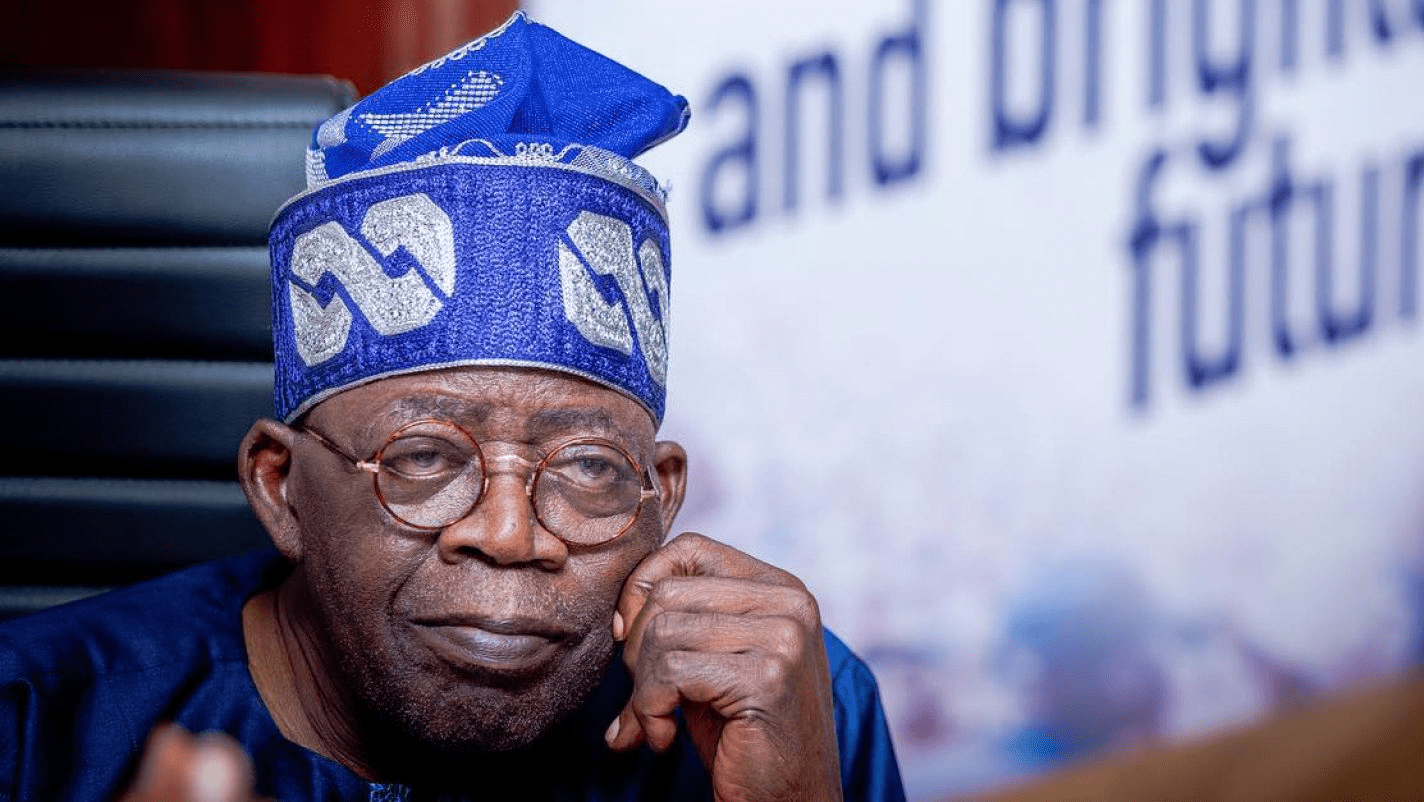
This message is directed to President Bola Ahmed Tinubu, the leader of our nation. As someone who once stood for freedom, justice, and the rule of law, it is troubling to see Nigeria now drifting away from the very principles you once fought for.

From the top to the grassroots, lawlessness is creeping into the fabric of our society. Ministers and political office holders, instead of leading by example, are beginning to act without regard for due process or the constitution. A democracy is meant to be a government of the people, by the people, and for the people. It thrives on transparency, accountability, and adherence to the rule of law — not intimidation or abuse of power.

The recent actions by David Umahi, the Minister of Works, are a case in point. Property owners and investors are now living in fear, as projects and investments are being destroyed under the guise of development, often without proper legal backing or consultation. This not only erodes public trust but also discourages investment in our economy.

Even more disturbing is the unjust arrest of Nigerian activist Martins Vincent Otse, popularly known as VeryDarkMan by Economic and Financial Crimes and Commision(EFCC). He was picked up and held for 72 hours without any clear charge or due process. If indeed he broke any law, the proper approach should have been an invitation to respond to allegations. Arresting him like a criminal, without explanation, is not just a violation of his rights — it is a blow to the democracy we claim to uphold.

Contrast this with the case of Yahaya Bello, former Governor of Kogi State, who is alleged to have looted over 80 billion naira. Till today, there has been no similar urgency in pursuing justice. This selective application of the law raises serious questions about fairness and credibility.

Why is it that youth voices are being silenced while powerful politicians operate above the law? Is this the democracy we fought for? It is becoming increasingly difficult for Nigerians to speak freely without fear of retaliation. Arresting citizens for expressing dissent or criticism is not governance — it is tyranny in disguise.

Mr. President, this is not the Nigeria we dreamed of. As someone who once led battles for free speech, for freedom of movement, and for the rule of law, we urge you to reflect on the direction your administration is heading. Power is fleeting. History will remember what leaders do in times like this.

All over the world, especially in democracies like the United States, presidents face public criticism daily. That does not justify unlawful arrests. Freedom of speech is a pillar of any functioning democracy. Silencing voices today only endangers the peace of tomorrow.

It is time for a reset. Government appointees and ministers must be held accountable. The rule of law must not be optional — it must be sacred. As a nation, we are walking a dangerous path. If unchecked, this descent into authoritarianism may lead to consequences that future generations might find impossible to fix.

We are not enemies of the state — we are patriots who want Nigeria to work. We believe in a country where laws are obeyed, where voices are heard, and where justice is blind to status or power. Let us remember that power comes and goes. Let our leaders strive to leave a legacy built on justice, not fear.

Nigeria deserves better — and together, we can make it better. But it starts with obeying the law, respecting the people, and protecting our democracy.

I am Faduri Oluwadare Joseph, founder of the Rescue Movement for a New Nigeria. Let us rise together to build a Nigeria that respects the rule of law — a country that future generations can be proud of.

Governor Radda attends CPC Stakeholders Press Briefing in Abuja

Governor Radda attends CPC Stakeholders Press Briefing in Abuja

Governor Dikko Umaru Radda was among the prominent leaders present at the Yar’Adua Centre in Abuja today for a press conference by former CPC stakeholders.

The gathering was a clear reaffirmation of their unity and unwavering loyalty to the APC, as well as strong support for President Bola Ahmed Tinubu’s Renewed Hope Agenda.

Key figures in attendance included Senator Umaru Al-Makura, former Governor of Nasarawa State; Senator Abu Ibrahim; Brig. Gen. Muhammad Buba Marwa, Chairman of the NDLEA; Governor Aminu Bello Masari; Senator Hadi Sirika; and Chief Osita Okechukwu among several other stakeholders.

Senator Umaru Tanko Al-Makura, representing the group, made it clear that despite recent speculations, the former CPC members are firmly committed to the APC. He recalled their vital contributions to the party’s formation and success, especially in the 2015 elections that ushered in a new era under President Muhammadu Buhari.

The conference also emphasized the importance of patience and support for President Tinubu’s leadership as the nation tackles necessary reforms.

The stakeholders, called for dialogue within the party to resolve any grievances.

They reminded everyone that loyalty is tested in difficult times, and that Nigeria’s future hinges on unity, perseverance, and the collective strength of the party.

Kaduna’s Roads: A Tale of Three Governors

Kaduna’s Roads: A Tale of Three Governors

By Maxwell Bako Dogara

Kaduna State is witnessing a quiet but powerful transformation in its road infrastructure—one that does more than connect people and places. Under Governor Uba Sani, road construction is rewriting the political narrative of performance, equity, and quality in governance. For the first time in over a decade, Kaduna’s rural communities and farming hubs are finally at the centre of a strategic infrastructure vision that prioritizes both food security and inclusivity.

What makes this change even more telling is the historical contrast it draws. For instance, roads built under the late Governor Patrick Yakowa—such as Yakowa Way in Millennium City and the Yan Karfe to Emanto Junction Road in Zaria—still stand strong more than a decade later. Constructed around 2010, these roads have withstood the test of time, weather, and usage. They are physical testaments to Yakowa’s principled commitment to quality, functionality, and sustainability. In a state where infrastructure is often politicized, Yakowa’s legacy remains quietly unshaken, in contrast to El-Rufai’s.

By comparison, the road projects under Governor Nasir El-Rufai, completed just a few years ago, have failed to demonstrate the same resilience. Roads like Rafin Guza and FRCN Road—once flagged as part of a grand “urban renewal” agenda—have become early casualties of poor durability. Governor Uba Sani is now not only reconstructing these roads but expanding them. The Rafin Guza project, for example, is being extended to Hayin Naiya, Malalin Gabas, and Kukumake, ultimately linking to the KASU Permanent Site—a move that reflects deeper planning and inclusive connectivity.

It doesn’t stop there. Several other roads built under El-Rufai—Lugard Roundabout to Kawo, College Road in Unguwan Dosa, Rigasa to Railway Station Road, Mando to Rigasa Road, and Sabon Birni Road in Kawo—have all required urgent maintenance under Uba Sani’s administration, despite being only a few years old. These are not isolated failures; they are symptomatic of a governance model that emphasized optics over durability, urban showpieces over rural necessities.

Governor Uba Sani’s approach marks a radical departure. His road transformation is not just about fixing inherited decay—it’s about building a people-first roadmap that reconnects Kaduna’s economy to its agricultural heartbeat. His government is focusing on roads that matter to the majority: rural roads that open up farmer markets, connect villages to processing centres, and reduce post-harvest losses. This strategy, rooted in economic pragmatism, is already playing a vital role in Kaduna’s growing push for food security.

Under the so-called “Urban Renewal Programme,” the El-Rufai administration focused on road development in just seven LGAs, leaving vast swaths of the state underdeveloped. Even more damning, 76% of these projects were concentrated in just one local government area—Kaduna North—revealing a deeply skewed development pattern that alienated rural dwellers and undermined the potential of the agricultural economy. Governor Uba Sani has responded with a statewide rural road inclusion policy, distributing development more evenly and rebuilding trust between government and the governed.

This is not mere road construction—it is a philosophical reset. While El-Rufai’s infrastructure legacy is beginning to unravel just two years after he left office, Uba Sani’s roads are being laid with vision, purpose, and rural empowerment at their core. The rural farmer in Giwa or the market woman in Kauru now has just as much right to smooth roads as the civil servant in Barnawa. That is what inclusive governance looks like.

As one political analyst aptly puts it, “Inclusive governance is not when everyone claps in the city, but when development reaches the quiet corners where voices are seldom heard.”

The contrast is now impossible to ignore: while El-Rufai built for applause, Uba Sani is building for impact. While Yakowa built for posterity, Sani is building for prosperity.

If the roads of a state can tell a story, Kaduna’s roads are today telling one of truth, equity, and overdue correction. Governor Uba Sani’s quiet revolution is not only correcting the wrongs of the past—it is setting the pace for what infrastructure should mean in a democratic society: service to all, not a few.

Dogara, a public commentator, wrote from Kaduna

Rising Up for a New Nigeria: Flag of Rescue Movement Hosted in Rivers State

Rising Up for a New Nigeria: Flag of Rescue Movement Hosted in Rivers State

In a bold and inspiring move, Rescue The Vulnerable Initiative otherwise known as Rescue Movement For New Nigeria is sweeping across the nation, driven by the unyielding passion and determination of the younger generation to revolutionize party politics. Hosted in the vibrant city of Port Harcourt, Rivers State, this socio-political organization is on a mission to bring hope and empower the vulnerable and marginalized with the right skill and information needed to build a new Nigeria while giving them a voice and a platform to shape their own destiny.

According to the Director-General, Martins Chiedozie Ugwu, the movement is committed to doing things differently. With a groundbreaking ideology centered on wealth distribution among the most vulnerable members of society, Rescue Movement is poised to redefine the political landscape of Nigeria.

“We believe that collective action can achieve what individual efforts cannot,” the Director-General declared. “Our mission is to unite young people, vulnerable Nigerians, and like-minded individuals to join forces and drive transformative change in our country. We invite all well-meaning Nigerians to join us on this journey towards a brighter future, where young people can shape their destiny and build a better tomorrow for themselves and for generations to come.”

The movement’s impact is already being felt, with Comrade Asito Asito, Rivers State Coordinator, expressing gratitude to the organization for entrusting him with leadership responsibilities in the state. He pledged to propel the movement to new heights, ensuring its message resonates with the masses and inspiring a new wave of leadership and activism among young Rivers.

As a movement championed by young and patriotic Nigerians, Rescue The Vulnerable Initiative has already made a significant impact in the political landscape. The organization has sponsored many young people in recent elections, including their presidential aspirant, Faduri Joseph, popularly known as Fadojoe whom they believe is equipped with the right leadership to transform the country. This commitment to nurturing and empowering young leaders is a testament to the movement’s dedication to building a brighter future for Nigeria.

Special Needs Educator Plans Big for Disabled Children

Special Needs Educator Plans Big for Disabled Children

In a bold and compassionate move, special needs educator Aisha Ibrahim Ahmad is championing a unique Children’s Day celebration that centers children often left out—those living with neurological and psychosocial disabilities.

Slated for May 27, 2025, at JPEC Chiemel Academy in Zaria’s GRA, the event is themed “Play Therapy for Holistic Development” and is set to offer therapeutic and inclusive play experiences for children with conditions such as Autism, ADHD, cerebral palsy, and anxiety disorders.

Ahmad, who also coordinates the Centre for Assessment and Educational Rehabilitation at the Federal University of Education, Zaria, says the initiative is designed to promote emotional healing, social interaction, and confidence-building through structured play activities.

“We’re using play not just for fun, but as a form of therapy and inclusion,” she explained. “Every child deserves joy, support, and visibility—especially on a day meant to celebrate them.”

The programme, spearheaded by her non-profit, Nurture Special Education Needs Foundation (NSENF), will include sensory zones, creative arts, music and movement therapy, storytelling, and group games. Caregivers and therapists will also receive training and tools to extend the benefits beyond the day.

Backed by a strong publicity drive and an open call for sponsorship, the event is already gaining traction among educators, advocacy groups, and disability rights organizations.

With this effort, Aisha Ahmad is not just organizing an event—she’s making a statement: that inclusion is not optional, and that every child, regardless of ability, deserves to be celebrated.

CSA To Bauchi State Government Accused Of Betraying His Closed Aide

CSA To Bauchi State Government Accused Of Betraying His Closed Aide

The personal Assistant and loyalist to AIG Ahmad AbdurRahman, the Chief Security Adviser to the Bauchi State Government has decried unfairness, injustice and betrayal from his boss after appointing him as his aide perhaps sought for an interview with our paper. Abdullahi Ishaq a trained Intelligence expert and seasoned Investigator who started his career with the EFCC eighteen years had undergone training with both the Police, DSS, EFCC and the FBI which made him to be very professional in the Intelligence Service.

Soon after his Boss appointment he was requested to relocate to Bauchi to serve him as PA precisely in December 2024. That upon arriving in Bauchi his boss introduced him into two different offices and asked him to one in the Deputy Governor’s former office. That after spending three days he was made to return back to Kaduna and to resume full work after the Christmas and new year Break but to his surprise after the break he call his boss to inform him of his intention to return work as agreed but to his surprise his Boss didn’t pick it return his call until after a month. Even though before his Boss could return his calls in over one month he was reliably informed that two other officers were employed in his boss office as PA and SA but he pretended he didn’t know and decided to play along with his boss.

After a few weeks Ahmad AbdurRahman asked Abdullahi to report to Bauchi for the second time precisely four days to this year fasting. Upon arriving in Bauchi his boss requested another office to be allocated to him because the first office given was slated to used for a different purpose. His boss still requested him to return back to Kaduna to commence the Ramadan and after the Sallah break they will resume office.

That after the sallah break his boss Ahmad AbdurRahman called to tell him that he is returning to Bauchi for an urgent assignment in Abuja which the Governor has directed him and go with one Commissioner for about a week. He further said that after a week I would return to Bauchi along with his Orderly Inspector Abubakar Haruna but two days later he called the Orderly to tell him to pick his Bauchi State Government staff car and meet him Abuja without telling me. Still after the assignment in Abuja his boss refused to call or pick his calls to tell him the next line of action. They returned to Kaduna from Abuja and proceeded back to Bauchi.

When Abdullahi Ishaq discovered there was a lot of uncertainty surrounding appointing him as PA and his possible resumption in office he proceeded to Bauchi the third time without notifying his boss he was coming. Upon arriving he called to tell the CSA, he had arrived in Bauchi. CSA Ahmad AbdurRahman responded through his Orderly Inspector Abubakar Haruna that on no account the PA should resume work in the government house and why would he even follow him to Bauchi even. In the circumstances PA Abdullahi Ishaq requested to see the CSA one on one to be sure if the message the Orderly conveyed to him emanated from Ahmad AbdurRahman and what was the rationale behind conveying such an insulting message to him. Upon reaching out to AbdurRahman in person, he requested Abdullahi Ishaq to relinquish his role as PA and that there are serious allegations against him of investigating the Executive Governor and he didn’t give him a free and fair hearing nor provide evidence either documents, video or audio to claim the purported allegations against his PA. He only insisted that he had dropped him as his PA to avoid problems with the Executive Governor. Following the provoking and counter productive statements from his boss he now reasoned why it took his boss all this long wasting his time without telling him the truth. That he is not surprised by his boss utterances he has already used body language to communicate the message to him but thank God since he had made it clear to him now. But he would ensure he met the Executive Governor personally to report the purported allegations leveled against his and seek for a free and fair hearing on the matter. He further averred that over time he has tried as much as possible to maintain his loyalty to Ahmad AbdurRahman despite his boss shortcomings and inconsistency but since it has taken that dimension everything is over.

That his boss is a greedy and self centered person who doesn’t help his boys to rise up, who looks down on others. He has pride as well as underrating anybody that works with him. Over the years he has been with he contributed immensely in destroying his career but he still managed to work with him. After his boss appointment as CSA in Bauchi he has had so many problems with other appointees. He slanders and undermines his colleagues by persuading the Governor to relieve them of their appointments. Despite his appointment as Chief Security Adviser he often lobbied the Governor to remove the Commissioner of Internal Security, the Chairman Bauchi State Anyi Corruption Commission or the Chief of Staff and gave it to him. AbdurRahman has not been contented with his appointment as CSA he still lobbied to be appointed Commissioner of Internal Security in Kaduna State, he lobbied the position using the Chief Imam of Sultan Bello and his so called friend Baballe Na Abba.

Ahmad AbdurRahman a serial betrayal is well known slandering, destroying people’s images even the Governor that appointed him is not left behind. He pretend to be a Godly person which is not true. He pretended to be an incorruptible officer but silently made millions in many areas as CP in many states Commandant Polac etc. While in Polac he denied his aides all their entitlements rather using the money to paying media outlets to boost his images as well as covering dirty deals among other things.

Alleged fraud: Trial of ex-Power Minister, Sale stalled over absence of interpreter

Alleged fraud: Trial of ex-Power Minister, Sale stalled over absence of interpreter

The trial of former Minister of Power, Saleh Mamman has been stalled before the Abuja division of the Federal High Court due to the absence of an interpreter.
When the case was called on Friday, the prosecution counsel, A O. Mohammed informed the court that though the matter was for continuation of trial-within-trial, however, he was experiencing difficulty in getting an interpreter.
He said he was informed that the official interpreter of the court was on an official engagement.
The prosecution counsel consequently requested for a short adjournment to enable the presence of an interpreter.
His oral application was not objected by the defence counsel, Emmanuel Hassan.
Accordingly, Justice James Omotosho adjourned further trial to May 8 and 9, 2025.
The Economic and Financial Crimes Commission (EFCC) is prosecuting Mamman in a charge marked: FHC/ABJ/CR/273/2024 bordering on alleged money laundering.

However, the defendant who has since denied the allegations, said that operatives of the EFCC interrogated him under duress, during their investigation over the alleged fraud.
Following his claim, the court is presently conducting a trial-within-trial as ordered Justice James Omotosho, to a certain the veracity of his claim.
Meanwhile, the prosecution has already called witnesses to testify in the trial including a deputy Manager, Domestic Payment division of the Central Bank of Nigeria (CBN), Okoroafor Chinyere, who told the court that the apex bank managed a project account on behalf of the Office of the Accountant General of the Federation (OAGF).

Okoroafor, who was led by the defendant counsel, Femi Atte (SAN), confirmed to the court that the Economic and Financial Crimes Commission (EFCC) wrote a letter to the bank, demanding for details on a Mambila / Zungeru special project account, domicile with the CBN.

While speaking on the project account with the documents being tendered and admitted as exhibits before the court, Okoroafor confirmed that the bank manages the account on behalf of the accountant general office.

But when asked whether it was possible for the former minister or his office to make approval, she said: “I cannot say”.

“We don’t receive instructions to make payment on remita, we only get a directive from OAGF,” Okoroafor said.

Another prosecution witness, Abdullahi Suleiman, a Bureau De Change (BDC) operator, testified before the court that the narration of funds paid into his account did not indicate they came from the ministry.

Abdullahi Suleiman, said his companies received funds in their different bank accounts before and after Mamman’s tenure as minister. It was learnt that one Mustapha Bidda, is the Account officer in charge of the special project account with two other assistant under him, all of them staff of the office of the accountant general of the federation.

During the cross-examination by the defence counsel, Femi Ate (SAN), Suleiman admitted that the funds contained in the Accountant General of the Federation entries were paid into his companies’ accounts.

He told the court that the payments are: Fullest Utility Concept received N254m and N49.6m on May 9, 2018; N659.9m was received on January 16, 2019; and N407m was received on July 20, 2019.

Platinum Touch Enterprise Ltd received N849m on October 21, 2021, N86.5 m, 86.9m, and N97m on October 29, 2021.

Silverline Ocean Ventures received N90m on February 24, 2022; N82 m and N90m on March 30, 2022; Bureau Change received N90m and N92m on March 30, 2022; and Royal Promoter Venture received N85m.
The court was however told that the defendant has no relationship whatsoever with those companies.
Mamman, in a video clip played in the open court during his trial told Justice James Omotosho of the Federal High Court sitting in Abuja, that he had already told the operatives of the commission that he was not in the right frame of mind as he was just leaving sick bed during their investigation.

Before the clip was played, Counsel to the EFCC, Mr Rotimi Oyedepo, SAN, had told the court that the reason for playing the video is to show the court that a previous statement which the EFCC sought to tender in evidence was made voluntarily by the ex-minister.

While the counsel of the minister, Mr Femi Atte, SAN, interjected that it was made under duress because the minister was not in his right frame of mind as he had already told them he just left sick bed.

In the video clip, the minister was seen telling operatives of the EFCC that he left sick bed to to honour the invitation of the commission.

He also denied ownership of a property in Wuse 2 Nowhen he was asked by the officials of the EFCC during the investigation.

Report on Arrest of One Nura Usman ,False Narrative to blackmail Government- Group

Report on Arrest of One Nura Usman ,False Narrative to blackmail Government- Group

Group under aegis of Kaduna Youths for Peace and Development (KYPD) has described as false and cheap Blackmail the report on alleged arrest of one youth activist and advocate for good governance, Nura Usman a self proclaimed activist by Kaduna government.

According to the group, the information gathered from investigation revealed that the Police invited Nura Usman to explain the malicious Facebook Post on his social media handle and he ran away and switched off his phone, in order to create a cheap blackmail.

In a Statement jointly signed by the Chairman,Comrade Musa Lere and Secretary,Comrade Joseph Maigari the group which expressed sadness over
the Sahara Reporters’ story on Kaduna Government Critic, Nura Usman Abducted, Tortured Over Facebook Post As Wife reported is nothing but false.

It stated further, “He was never arrested and still on the run.He is running away from the law. He posted a false and inciting statement capable of breaching public peace in the state. He couldn’t substantiate his claim. His invitation by the security operatives has nothing to do with Kaduna State Government as reported.”

Nura Usman had posted on Facebook handle:”Information reaching my desk just now has revealed that some aides of a governor from Kaduna State have met with some selected student leaders of the state-owned university.

“These aides have commissioned the student leaders to hold a press conference and publicly condemn the ongoing strike by lecturers, who are urging the state government to fulfill outstanding demands after multiple unmet promises.

“Sources indicate that the student leaders have received the sum of N20,000 from the aides in question to facilitate this press conference. We shall see”.

On those behind Nura Usman inciting post ,the group averred,” We see him as someone allegedly being sponsored by former Kaduna State Governor,Mal. Nasiru Elrufai against Governor Uba Sani.

However, the Sahara Reporters quoted , a petition dated May 2, 2025,where he stated that ” a law firm alleged that Mr. Usman was abducted on the night of April 30 by heavily armed operatives of Operation Fushin Kada, a joint security task force comprising personnel from the Nigerian Army, Navy, DSS, Police, and other agencies.

“The law firm in the petition claimed the arrest was ordered by powerful officials within the Kaduna State Government, allegedly in retaliation for Facebook posts made by Mr. Usman on April 28 and 29 that criticized certain government policies.

“This is untrue and should be disregard by the public.”it stressed.

“I Served Not Only My Country But Also God” – Mele Kyari

“I Served Not Only My Country But Also God” – Mele Kyari

By Abdullahi Sabiu

The Ex- Group Chief Executive Officer(GCEO) of the Nigerian National Petroleum Company Limited (NNPCL), Mele Kyari, has firmly debunked media reports alleging that he is in the custody of the Economic and Financial Crimes Commission (EFCC) declaring “I served not only my country but also God” .

Kyari, in a personally signed statement, described the claims as deliberate falsehood peddled by an online newspaper and its unnamed sponsors to tarnish his image and mislead the public.

“I must emphasize that I served with the fear of God, knowing that if I do not account before man, I will certainly account before Allah,” Kyari said. “That is why I am happy and willing to respond to any lawful query regarding my stewardship.”

He clarified that he is currently on a well-deserved rest following the recent dissolution of the NNPCL board and management. With 34 years of service to the national oil corporation—17 of those in management and nearly six years as GCEO—Kyari said he barely had time for personal leave and is now taking time to recharge.

He expressed gratitude to former President Muhammadu Buhari and President Bola Ahmed Tinubu for the opportunity to serve, and warned that spreading unverified allegations could harm national institutions and discourage investor confidence.

Kyari also urged the media to avoid being used as tools for disinformation, thanking friends and family for their support and assuring them of his availability to respond to any lawful inquiries.

“From Yola With Code”: Nigeria’s First Fully AI-Generated Music Video Goes Viral — Created By Julius, Non-Musician Futurist

“From Yola With Code”: Nigeria’s First Fully AI-Generated Music Video Goes Viral — Created By Julius, Non-Musician Futurist

By Tom Garba-Yola

Nigeria has birthed its first fully AI-generated song and music video—and it didn’t originate from the bustling streets of Lagos, the political hub of Abuja, or a high-budget record label. It came straight from Yola, the heart of Adamawa State in North Eastern Nigeria.

Titled “Once Upon Little Yola,” this vibrant, soul-stirring tribute to Yola has taken the internet by storm. But it’s not just the melody or message that’s turning heads—it’s the groundbreaking way it was made. Every element—lyrics, music, vocals, and visuals—was crafted entirely by artificial intelligence. No human voice was recorded. No music studio was booked. No seasoned artist held the reins.

Instead, the mastermind behind this feat is Julius Mbidomti, a Yola-based futurist, development advocate, and AI enthusiast. Not a musician. Not a filmmaker. Just a dreamer who, three weeks ago, had never touched CapCut video editing software.

In Kigali, it clicked,” Mbidomti said. “We talk about AI’s potential, but what if we showed it? I returned to Yola, fired up my laptop, and got to work

WATCH IT HERE:

Straight Outta Kigali — Fueled by the Future

The spark for this project ignited at the Global AI Summit on Africa, held in Kigali in April 2025. Mbidomti, who attended the summit, found inspiration in sessions on Generative AI and the Creator Economy, which spotlighted how African youth could harness cutting-edge tech to break into the global creative scene.

“In Kigali, it clicked,” Mbidomti said. “We talk about AI’s potential, but what if we showed it? I returned to Yola, fired up my laptop, and got to work.”

What followed was a whirlwind of creativity: lyrics spun by large language models, beats and instrumentals sculpted by AI audio tools, vocals brought to life by voice synthesis, and visuals conjured through AI-powered image, video, and animation platforms. In just one week, a self-taught novice—who’d never made a music video before—wove it all together into a polished masterpiece.

Yola in Rhythm and Reimagination

“Once Upon Little Yola” is an Afro-fusion anthem pulsing with ancestral vibes, celebration, and hope. It opens with evocative lines:

“Back in my beloved home where blessings flow / Feel the power in my pulse when I touch this soil.”

The chorus swells with pride:

“Yola na gida — beautiful home / Where love and laughter belong.”

The accompanying video blends nostalgic glimpses of communal drumming, joyful dances, and sunlit dusty roads with futuristic AI-generated visuals—a seamless marriage of tradition and innovation that feels like digital folklore for a new Nigeria.

AI-Driven Creativity: A Game-Changer for Nigerian Youth

Beyond its tech wizardry, “Once Upon Little Yola” represents a seismic shift: the democratization of creativity. With millions of Nigerian youth grappling with unemployment or underemployment, this project proves that AI can shatter barriers to artistic expression. No costly equipment. No formal training. No industry insiders required—just a vision, an internet connection, and a willingness to dive in.

“I’m not aiming to be Burna Boy or Davido—those guys are giants,” Mbidomti quipped. “I’m showing that even an amateur can tell their story with tools anyone can access. This is youth empowerment in the digital age.”

A First of Its Kind

While Nigeria has flirted with AI in music before—think Eclipse Nkasi’s AI-assisted album Infinite Echoes or AkayCentric’s AI-themed climate change video Moving On—those projects still leaned on human vocals, songwriting, or creative direction. Once Upon Little Yola stands apart as Nigeria’s first 100% AI-generated work, from sound to screen, signaling a bold new frontier for African creativity.

The Future Just Got Local

Yola—often sidelined in Nigeria’s tech and cultural narratives—has catapulted onto the global stage. “Once Upon Little Yola” is more than a song; it’s a manifesto. It declares that with AI, anyone, anywhere, can craft something extraordinary and join the world’s cultural conversation.

If one non-musician with a laptop and a week’s worth of grit can pull this off, the question looms large: What’s next?