0ne Man, Many Parties; Kano’s Long Struggle with Political Monopoly

0ne Man, Many Parties; Kano’s Long Struggle with Political Monopoly

By Barrister Aminu Hussaini Sagagi

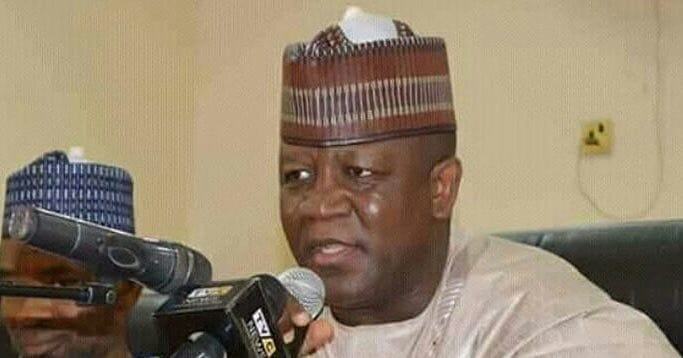
In the evolving theatre of Kano politics, the reported move by Sen. Rabiu Musa Kwankwaso to the African Democratic Congress (ADC) is being framed by his loyalists as yet another masterstroke of political relevance. But beneath the familiar choreography of defection lies a more uncomfortable truth, one that Kano’s politically conscious electorate must now confront with clarity and courage.

It is not a reinvention, as they euphorically claimed, it is a repetition. For decades, Kwankwaso has perfected a pattern of movement without ideological migration, defection without doctrinal evolution. From party to party, platform to platform, the constant has never been policy or principle; it has been personal centrality. The political vehicle may change, but the driver remains the same and the destination is invariably power concentrated in one man’s orbit.

For the first time in a long while, the choice before Kano electorates in 2027 is very clear – choosing between two political destinies; politics as personal preservation and politics as public evolution.

The ADC, in this context, risks becoming less a party and more an extension of a familiar enterprise; another platform recalibrated to sustain a personal political ecosystem. It is a model Kano knows too well; loyalty elevated above competence, structure subordinated to personality and dissent quietly erased in the name of movement cohesion.

This is the deeper question: At what point does political consistency give way to political monopoly?

Sen. Kwankwaso’s enduring strength has never been in institutional building but in emotional consolidation, the creation of a movement bound not by shared governance philosophy but by personal allegiance. Such a structure, while formidable in mobilization, is inherently fragile in transition. It struggles to outlive the will of its architect and resists the emergence of alternative voices within its fold. That is precisely where the contrast with Governor Abba Kabir Yusuf becomes both striking and significant.

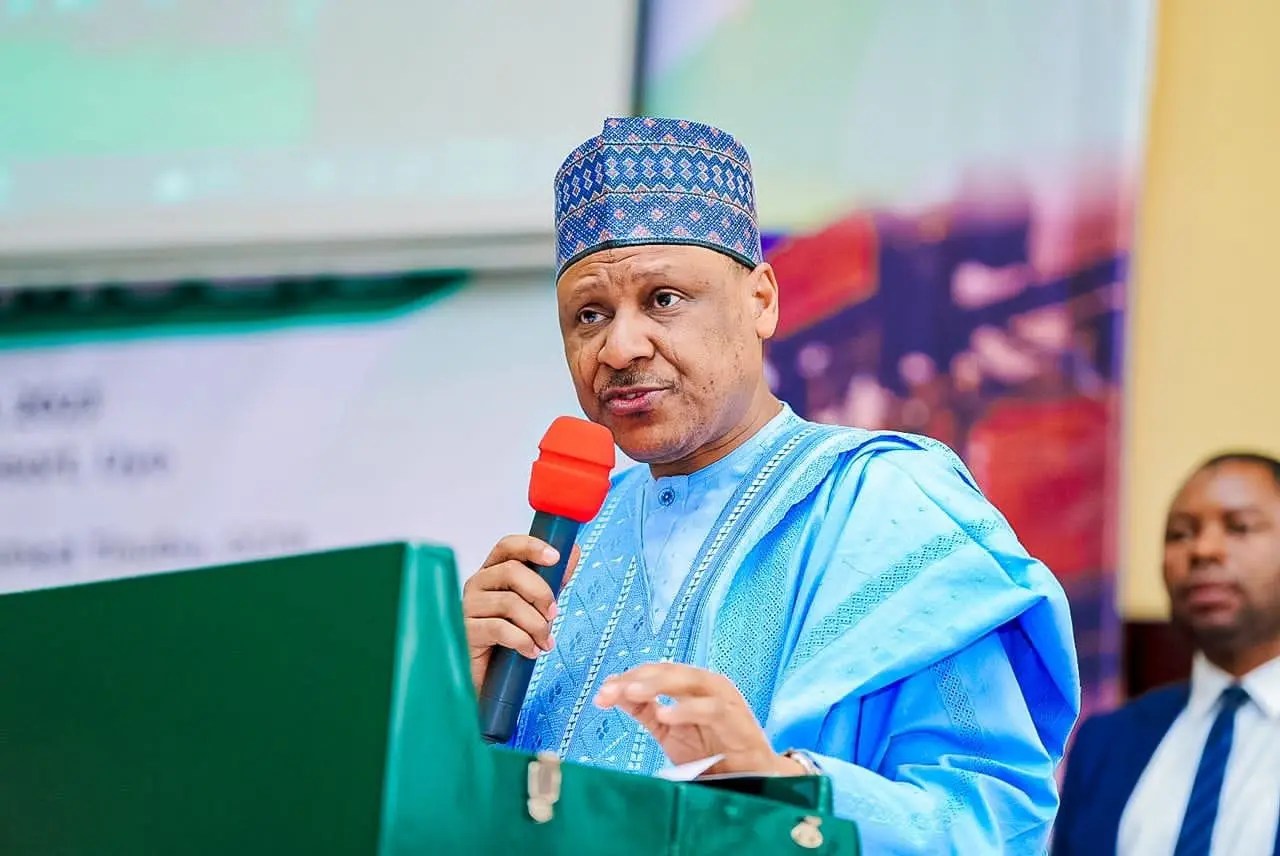
Governor Yusuf’s political realignment, controversial as it may appear on the surface, signals something Kano has long been denied, the assertion of institutional independence over inherited loyalty. In choosing to chart a course outside the shadow of political godfatherism, he has disrupted a long-standing orthodoxy that, leadership in Kano must be tethered to a singular political patriarch.

That was not merely a defection, it was a declaration. A declaration that governance must evolve beyond the boundaries of personal empires. That Kano’s future cannot remain perpetually negotiated within the inner circles of a single political lineage. That leadership must, at some point, belong fully to the people, not proximally to a benefactor.

Critics will argue that politics is, by nature, fluid, that movement between parties is neither new nor inherently problematic. And they would be correct. But fluidity becomes suspect when it consistently flows in one direction, towards the preservation of personal dominance rather than the advancement of public purpose.

What Kano now witnesses is a defining divergence in political philosophy. On one hand, a recycled trajectory, a seasoned tactician seeking renewed relevance through another platform, carrying forward a model anchored in personal command. On the other, an emergent assertion, a sitting governor boldly attempting, however imperfectly, to redraw the boundaries between mentorship and control, loyalty and autonomy.

This moment, therefore, is larger than party labels. It is about the ownership of Kano’s political future. Will it remain the extension of an enduring political dynasty, adaptable in platform but constant in control?
Or will it gradually transition into a more open, institution-driven system where leadership is negotiated by performance rather than predetermined by allegiance?

Sen. Kwankwaso’s move to ADC may yet reshape alliances, energize opposition and reconfigure the electoral map. But it also inadvertently sharpens a narrative that may prove far more consequential, the contrast between politics as personal preservation and politics as public evolution. In that contrast lies the real contest ahead. And perhaps, for the first time in a long while, Kano is not merely choosing between parties, it is choosing between two political destinies.

Barrister Hussaini is the
Convener – “KanoFirst Movement”

2027 Senate : A Clarion Call for Youth Representation Under the Umbrella of FCT Council

2027 Senate : A Clarion Call for Youth Representation Under the Umbrella of FCT Council

Young progressive leaders across the Federal Capital Territory (FCT) have thrown their weight behind Hon. Abubakar Umar Abdullahi, describing him as a dynamic, people-centered, and result-driven leader with the capacity to represent the interests of the people at the Senate.

They noted that with over 64 percent of registered voters being young people, the demand for inclusive and youth-focused representation has never been more urgent.

According to the group, Hon. Abdullahi,the current Abaji Chair,embodies the energy, vision, and commitment needed to drive meaningful change and amplify the voices of young Nigerians within the National Assembly.

The youth leaders therefore called on him to heed the growing demand and step forward to contest for the FCT Senate seat, stressing that his candidacy would mark a turning point in the push for generational inclusion in governance.
.
“This is our moment,The future belongs to the youth—and that future is now. ” the statement read. “The rise of young progressives begins now.”

Shehu Sani Condoles El-Rufai Over Mother’s Death

Shehu Sani Condoles El-Rufai Over Mother’s Death

Former Kaduna Central Senator, Shehu Sani, has condoled with former Governor of Kaduna State, Nasir El-Rufai, over the death of his mother.

In a condolence message issued on Saturday, Sani described the passing as a profound loss not only to the El-Rufai family but also to Kaduna State and the nation at large.

He paid glowing tribute to the deceased, commending her life of service, community leadership, and the enduring legacy of her motherly care and guidance.

“Her death is a great loss to Kaduna State and the nation at large. We appreciate her life, community leadership, and motherly love,” he said.

Sani also prayed for the repose of her soul, asking Allah to forgive her shortcomings and grant her Aljannatul Firdaus. He further prayed for strength and comfort for El-Rufai and his family in this moment of grief.

“May Allah console the heart of our former Governor and his family members,” he added.

Reflecting on a personal connection, the former lawmaker noted that the deceased was also the mother of his late childhood friend, Ibrahim Iro El-Rufai, who died in a tragic road accident in 2014.

He concluded with the Islamic expression, “Inna lillahi wa inna ilayhi raji’un,” meaning, “Indeed, we belong to Allah, and indeed to Him we shall return.”

Renewed Hope Initiative: ECN DG Hosts Conference of Speakers, Reaffirms Push for Nationwide Solarization.

Renewed Hope Initiative: ECN DG Hosts Conference of Speakers, Reaffirms Push for Nationwide Solarization.

In a move to boost energy planning within the States of the Federation, the Director-General of the Energy Commission of Nigeria (ECN), Dr. Mustapha Abdullahi, has received the Conference of Speakers of State Houses of Assembly at the Commission’s headquarters in Abuja.

This ís as he reaffirmed the Federal Government’s commitment to strengthening partnerships with states to address energy shortfalls across critical public infrastructure.

The engagement which focused on advancing the solarization of government buildings, healthcare facilities, schools, and other essential institutions is part of a coordinated national effort to deliver clean and sustainable energy solutions.

Dr. Abdullahi noted that the initiative aligns with President Bola Ahmed Tinubu’s Renewed Hope Agenda and supports the decentralization of Nigeria’s energy master plan through the large-scale deployment of renewable energy technologies.

He emphasized that the project will enhance energy access, reduce reliance on the national grid, and promote environmental sustainability.

The Director-General further stated that the initiative is expected to significantly improve energy reliability in public institutions while accelerating Nigeria’s transition to sustainable energy.

Speaking on behalf of the delegation, the Speaker of the Delta State House of Assembly commended the solarization programme and assured that state legislatures would provide the necessary support to ensure its timely and effective implementation.

The solarization project, launched in 2025, is a key component of the Federal Government’s broader clean energy drive aimed at powering public institutions across the country with solar energy.

Shehu Sani Condoles El-Rufai Over Mother’s Death

Former Kaduna Central Senator, Shehu Sani, has condoled with former Governor of Kaduna State, Nasir El-Rufai, over the death of his mother.

In a condolence message issued on Saturday, Sani described the passing as a profound loss not only to the El-Rufai family but also to Kaduna State and the nation at large.

He paid glowing tribute to the deceased, commending her life of service, community leadership, and the enduring legacy of her motherly care and guidance.

“Her death is a great loss to Kaduna State and the nation at large. We appreciate her life, community leadership, and motherly love,” he said.

Sani also prayed for the repose of her soul, asking Allah to forgive her shortcomings and grant her Aljannatul Firdaus. He further prayed for strength and comfort for El-Rufai and his family in this moment of grief.

“May Allah console the heart of our former Governor and his family members,” he added.

Reflecting on a personal connection, the former lawmaker noted that the deceased was also the mother of his late childhood friend, Ibrahim Iro El-Rufai, who died in a tragic road accident in 2014.

He concluded with the Islamic expression, “Inna lillahi wa inna ilayhi raji’un,” meaning, “Indeed, we belong to Allah, and indeed to Him we shall return.”

Shehu Sani Condoles El-Rufai Over Mother’s Death

Former Kaduna Central Senator, Shehu Sani, has condoled with former Governor of Kaduna State, Nasir El-Rufai, over the death of his mother.

In a condolence message issued on Saturday, Sani described the passing as a profound loss not only to the El-Rufai family but also to Kaduna State and the nation at large.

He paid glowing tribute to the deceased, commending her life of service, community leadership, and the enduring legacy of her motherly care and guidance.

“Her death is a great loss to Kaduna State and the nation at large. We appreciate her life, community leadership, and motherly love,” he said.

Sani also prayed for the repose of her soul, asking Allah to forgive her shortcomings and grant her Aljannatul Firdaus. He further prayed for strength and comfort for El-Rufai and his family in this moment of grief.

“May Allah console the heart of our former Governor and his family members,” he added.

Reflecting on a personal connection, the former lawmaker noted that the deceased was also the mother of his late childhood friend, Ibrahim Iro El-Rufai, who died in a tragic road accident in 2014.

He concluded with the Islamic expression, “Inna lillahi wa inna ilayhi raji’un,” meaning, “Indeed, we belong to Allah, and indeed to Him we shall return.”

Kano First: The Landmark Ruling That Validates Governor Yusuf’s Bold Shift.

Kano First: The Landmark Ruling That Validates Governor Yusuf’s Bold Shift.

By Barrister Aminu Hussaini Sagagi

In moments of political turbulence, leadership is ultimately judged not by loyalty to structures in crises, but by fidelity to the people one serves. The recent ruling of the Apo Judicial Division of the Federal Capital Territory High Court, which recognized the Boniface Aniebonam faction of the NNPP as the legally authentic party and directed INEC accordingly, has brought a decisive clarity to what had long been an increasingly murky and destabilizing internal conflict.

For the Governor of Kano State, Alhaji Abba Kabir Yusuf, this judicial pronouncement does more than settle a factional dispute, it vindicates a decision that, at the time it was made, attracted fierce criticism but was rooted in pragmatic foresight and responsibility.

When the Governor chose to part ways with the faction aligned to Sen. Rabiu Musa Kwankwaso, the dominant narrative pushed by critics was one of betrayal. Yet, with the benefit of unfolding events and now the weight of judicial affirmation, it is increasingly evident that the decision was not about political convenience but about safeguarding the stability of Kano State.

At the heart of the matter lies a simple but propound principle that governance cannot thrive in the shadow of legal uncertainty and factional paralysis. The protracted crisis within the NNPP had already begun to cast a long shadow over its elected officials, raising legitimate concerns about party legitimacy, electoral mandates and the risks of prolonged litigations.

For a sitting Governor, the implications were stark; whether to remain entangled in a party facing existential legal disputes or chart a course that ensures continuity of governance and protects the mandate entrusted by the people. Governor Yusuf chose the latter.
His defection to the All Progressives Congress (APC) must therefore be understood not as an abandonment of political ideals, but as an act of strategic recalibration in the interest of the people. By stepping away from a party embroiled in internal contradictions, now confirmed by the court’s recognition of a rival faction, he effectively insulated Kano from the kind of instability that often accompanies prolonged political and legal crises.

Critically, this move also positioned the state to benefit from stronger alignment with the federal government. In Nigeria’s political economy, access matters. Federal collaboration can accelerate infrastructure development, enhance security coordination and unlock economic opportunities that might otherwise remain out of reach. In this regard, the governor’s decision reflects a clear prioritization of outcomes over optics and of tangible progress over partisan rigidity.

It is also worth noting that leadership sometimes requires the courage to endure temporary misunderstanding in pursuit of long-term stability. The initial backlash that greeted the governor’s move was, in many ways, inevitable in a political environment deeply shaped by loyalty to personalities and movements. However, as the internal contradictions within the NNPP have now been laid bare through judicial intervention, the logic underpinning Governor AKY’s decision becomes increasingly difficult to dispute.

This is not to suggest that political realignments are without consequence or controversy. They are, by nature, disruptive. But disruption, when guided by a clear commitment to public interest, can be a necessary prelude to stability and progress.
The unfolding reality, therefore, invites a reaffirming of the narrative. Rather than viewing the governor’s defection through the narrow lens of partisan allegiance, it should be seen within the broader context of responsible governance. Faced with a party in disarray and risk of legal and political uncertainty, Abba Kabir Yusuf chose a path that prioritized Kano first, its stability, its development and its future.

In the final analysis, history tends to be kinder to decisions that place people above politics. The recent court ruling does not merely resolve a party dispute, it underscores a deeper truth that in times of crisis, decisive leadership anchored in the public good will always find its justification.
Kano deserves stability; Kano deserves progress and above all, Kano deserves leadership that is willing to make difficult choices.

Barrister Hussaini is the Special Adviser to Governor AKY on Justice/Constitutional Matters.

Dantsoho @57: Maritime Momentum Master

Dantsoho @57: Maritime Momentum Master

By Abdullahi Sabiu

Fresh from a defining moment on the global stage in Japan, where he secured a prestigious international maritime leadership role, Abubakar Dantsoho clocks 57 with his profile not just rising at home, but commanding recognition across the world’s maritime corridors.

It is a fitting milestone for a man whose steady hand is fast redefining Nigeria’s port ecosystem.

At the helm of the Nigerian Ports Authority (NPA), Dantsoho has emerged as a quiet reformer with global relevance—bridging local execution with international credibility. His recent recognition abroad is more than ceremonial; it is a validation of reforms taking root within Nigeria’s once-troubled port system.

Since assuming office, he has steered the NPA away from chronic inefficiencies toward a culture of discipline, coordination, and forward planning. Congestion is being confronted, processes are being streamlined, and the long-overdue march toward port digitisation is gaining traction. The result is a system gradually shedding its old image and embracing operational clarity.

Dantsoho’s leadership is defined by resolve rather than rhetoric. He understands that ports are not just terminals—they are economic lifelines.

Under his watch, every improvement in cargo clearance, every reduction in turnaround time, and every increase in transparency feeds directly into national productivity and investor confidence.

What sets him apart is his ability to navigate a complex web of stakeholders without losing focus. The maritime sector, long burdened by entrenched interests, is yielding—slowly but surely—to a new order driven by accountability and shared purpose.

Now, with global recognition reinforcing his local reforms, Dantsoho stands at a unique intersection: a technocrat with both domestic impact and international voice.

His growing influence signals that Nigeria is no longer content with being a passive player in global maritime affairs.

At 57, his journey reflects discipline, depth, and direction. Not loud, not flamboyant—but effective, strategic, and increasingly impossible to ignore.

As Nigeria pushes to unlock the vast potential of its blue economy, one thing is becoming clear: the momentum is real—and Dantsoho is firmly at its centre.

SUMMARY OF PRESENTATION OF THE CDS AT INAUGURAL LECTURE OF JDWC.

SUMMARY OF PRESENTATION OF THE CDS AT INAUGURAL LECTURE OF JDWC.

The Chief of Defence Staff, General Olufemi Oluyede, a gallant and professional military leader, has emphasized the importance of border synergy and indigenous defence production in ensuring Nigeria’s national security. Speaking at the inaugural lecture of the Joint Doctrine and Warfare Centre (JDWC), the CDS highlighted the need for self-reliance, regional collaboration, and joint synergy among all military and security agencies to address multifaceted security threats.

Key points emphasized by the CDS include:

  • Strengthening local defence production through the Defence Industries Corporation of Nigeria (DICON) and other local manufacturers
  • Enhancing border security and maintaining good relations with neighbouring countries
  • Promoting synergy and joint military operations among the services
  • Leveraging the peculiar competencies of each service to achieve operational outcomes
  • Adopting home-grown strategies to address insecurity challenges

The outcome of the lecture will be presented to the Federal Executive Council (FEC) and the Nigeria Governors’ Forum to secure broader stakeholder buy-in and support for implementation of recommendations.

Note: The CDS did not imply that any service has failed or that there is a lack of synergy among the services. Rather, he highlighted challenges faced in the past and emphasized the need for joint synergy and home-grown strategies to achieve results.

Awwal Abdullahi Aliyu
President Nineteen Seventeen Northern Consensus Movement for Peace Unity Empowerment and Development Initiative NSNCM
An amalgamation of 598 registered Northern associations from the Nineteen northern states and Northern community associations resident in the Seventeen southern states and FCT

ECN, Nigerian Air Force Collaborate to Enhance Energy Security

ECN, Nigerian Air Force Collaborate to Enhance Energy Security

The Energy Commission of Nigeria (ECN) and the Nigerian Air Force have initiated a strategic partnership to enhance energy security. This development follows a courtesy visit by a delegation from the Nigerian Air Force, led by the Chief of Civil-Military Relations, Air Vice Marshal E. K. Gabkwet, and the Chief of Logistics, AVM A. I. Sambo, to the Commission’s headquarters in Abuja.

During the visit, Air Vice Marshal Gabkwet expressed appreciation to the DG of ECN, Dr. Abdullahi, for granting the audience and conveyed the goodwill of the Chief of the Air Staff. He emphasized the importance of collaboration in developing renewable energy solutions to support anti-terrorism operations. He also requested technical training support from ECN for Air Force personnel and pledged the Air Force’s assistance in logistics, transportation, and other operational areas.

In his remarks, Dr. Abdullahi described the engagement as historic, noting that it is the first of its kind between the ECN and the military. He reiterated the Commission’s mandate to ensure national energy security and highlighted key policy frameworks, including the National Energy Policy (NEP) and the National Energy Master Plan (NEMP).

The Director-General further outlined ongoing solarisation projects in healthcare facilities and tertiary institutions, assuring the delegation that similar initiatives would be extended to the Nigerian Air Force. He also announced the immediate deployment of solar-powered lighting solutions to support Air Force operations.

Copies of the NEP and NEMP were presented to the delegation, and both parties affirmed that the partnership marks the beginning of sustained collaboration aimed at advancing national development and security.

The meeting was attended by ECN directors and members of the Air Force delegation, including AVM C. E. Akpa, Air Commodore L. O. Wabriboko, Air Commodore A. T. Adejimi, I. O. Akpasa, Squadron Leader A. B. Gambo, and Flight Lieutenant A. M. Aondoakaa.

Youth Leaders Demand Zoning of Zangon Kataf/Jaba Reps Seat to Zangon Kataf

Youth Leaders Demand Zoning of Zangon Kataf/Jaba Reps Seat to Zangon Kataf

Youth leaders from the Bajju, Atyap, Ikulu and Kamantan ethnic nationalities have called on the Kaduna State Government and political stakeholders to ensure that the House of Representatives seat for Zangon Kataf/Jaba Federal Constituency is zoned to Zangon Kataf Local Government Area ahead of the 2027 elections.

In a statement issued on Thursday, the youth presidents of the groups said the call was necessary to uphold what they described as a long-standing political rotation agreement between Zangon Kataf and Jaba LGAs.

The youth leaders warned that any attempt to disregard the existing understanding could threaten the political harmony and democratic stability of the constituency.

According to them, the distribution of registered voters within the constituency shows a significant disparity, with Zangon Kataf LGA having 180,998 registered voters compared to Jaba LGA’s 66,948.

“With a voting strength nearly three times that of Jaba LGA, the people of Zangon Kataf have remained patient, cooperative and committed to the spirit of brotherhood,” the statement said.

They noted that the political stability of the constituency has historically been maintained through a “gentleman’s agreement” that allows the two LGAs to rotate the House of Representatives seat on a two-term basis.

The youth leaders recalled that the current lawmaker, Hon. Amos Magaji from Jaba LGA, contested the seat in 2018 and is now serving his second term, which would give Jaba eight consecutive years of representation by the end of the current tenure.

“By every principle of equity and the established rotation arrangement, the seat should return to Zangon Kataf LGA,” they said.

The group also cautioned that ignoring the rotation principle could force Zangon Kataf youths to reconsider their political approach, including advocating a model where electoral victory is determined strictly by numerical strength.

They appealed to Governor Uba Sani and party leaders in the state to intervene by recognising the rotation arrangement and ensuring that the House of Representatives ticket for the constituency is zoned to Zangon Kataf in the next political cycle.

The statement was jointly signed by the Youth Presidents of the Bajju, Atyap, Ikulu and Kamantan ethnic nationalities and the leadership of the SOKAPU Youth Wing in Zangon Kataf Local Government Area.